Wednesday, April 23, 2014

"Final Reflections"

THE FINAL SPORTS PAGE!

  • What was your perception of US sport before you took this class?
Answer: My perception of US sport before taking this class looked much like one of most Americans.  The things I glorified in US sport were things such as power, dominance, and violence. 
  • Has your understanding/perception of US sports culture changed through taking this class? if so, how and why?
Answer:  Following up on my response to the last question I will say that my perception and understanding has changed.  I see how the things that are glorified in US sport such as violence can be damaging to the athlete in the grand scheme of things.  Through this class, I was able to recognize the problem and will support change in the future.
  • What discussion topics/new facts stood out to you the most? why?
Answer:  The topics that stood out to me were masculinity in sports and also advertising in sports.  It was really interesting to see how advertisers such as Nike, Gatorade, and many others shape our ideals and cultural norms.  
  • Will you start to ask more critical questions about the US sports world once you move on from this class?
Answer: Of course! This class has allowed me to see sports on a level beyond just entertainment.  I can now also make connections of how it links to cultural beliefs in US society.
  • Do you think you will be able to use any of the skills learned in this class in your future career? if so, how?
Answer:  I do believe the skills I learned in class will help me in my future career and possibly life.  The ability to understand people while doing sport can be beneficial to understanding people in doing other things in life.
  • Would you recommend this class to a friend? if so, why/why not?
Answer:  I would definitely recommend this class to a friend.  A sport fan, athlete, or neither can benefit studying sports in US society, one can understand US culture through critical analysis of sport in society.

References:

Professor Withycombe

Tuesday, April 8, 2014

"Why the 'Mans Mans' Game is an Insult to Men"


The movie titled "Training Rules" examined the Penn State women's basketball team during the 80's and 90's.  The team's coach made a slogan "No drinking, no drugs, and no lesbians" while at the university.  The problem wasn't solved or even really noticed until this documentary put a spotlight on a former team member who publicly came out to speak upon the issue.  

Is sport a safe space for LGBT athletes?

After watching the documentary it seems as if the inclined answer would be no.  In my opinion, I believe that it wasn't until a couple of years ago the answer would be no.  Due to recent publicly open gay athletes such as pro basketball player Jason Collins and exceptional college football player Michael Sams I would say that sport is a safe place for LGBT athletes.  

Why now and not then?

America has drastically changed from legalizing marijuana to legalizing gay marriage.  American culture has provided a new attitude towards LGBT lifestyles and is now widely accepted and seen as normal.  Through culture in America it became possible to change the old views on the LGBT community.  

I believe the only strategy to creating a more inclusive culture in American sport is through providing education to everyone about other cultures and of wrongful oppression in the histories of America and other countries.  In my opinion, most people are anti-gay because they are ignorant to gay cultures and lifestyles. It seems irrational to believe that more people are naturally hateful and bad than they are good.  

Music, pop culture, and education have paved a way towards a more progressive culture in American sport.

-Brandon Fukutome

References:

"Training Rules" 

http://www.cnn.com/2013/10/17/opinion/pearlman-wheres-jason-collins/

ESPN and Sports Radio discussions of Michael Sams

Wednesday, March 19, 2014

Darwins Athletes

Jackie Robinson, Michael Jordan, Muhammad Ali, Lisa Leslie, and Tiger Woods...

What do these people have in common?

Not only are they all African American athletes but they are also the ones who provide the foundation for defining the significance of sport in today's African American culture.  These athletes play the roles of idols and examples of success for African American people.  Sports are seen as a "ticket" out of the projects and inner-cities.

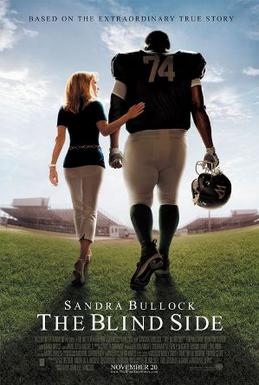
Hollywood portrayals of African American athletes are accurate with the personalities and the settings but fail to recognize that the majority of African American athletes do not have a "Cinderella" story.  For example, comparing the Hollywood movie "The Blind Side" to the documentary titled "Hoop Dreams".  The Blind Side much like other sports movies with African American athletes begins with a disadvantaged beginning and an eventual and glorious success.  I myself love these kinds of movies but documentaries such as "Hoop Dreams" portray the actual truth.  Most African American athletes don't make it past the high school and college level.  (Prof. Withycombe, ETHN 3104, Lecture)


I do believe that sport damages Black Americans and preserves the myth of race.  The stereotypes that are generated through sports entices Black Americans to define themselves through only their abilities in athletics.  Value is placed higher on being an athlete rather than becoming a doctor or a mathematician.  "Race is used to justify social inequalities as natural" (Prof. Withycombe, ETHN 3104, Ethnicity PPT).  Sports in African American culture currently plays a role in hindering a non racial point of view.

References:

http://upload.wikimedia.org/wikipedia/en/6/60/Blind_side_poster.jpg (Image)

Professor Jenny Withycombe Lectures and Power Point Presentations.

Tuesday, March 11, 2014

"Gender in Sports Commercials"

For this week's blog I chose to examine a "Just Do It" commercial by Nike.

http://www.youtube.com/watch?v=aPkyPdubqDs

The commercial portrayed typical gender stereotypes by showing females doing sports such as Tennis and Running while the males were shown doing sports such as Boxing, Soccer, and Basketball.  The athletes involved in the commercials were adhering to dominant gender roles and identities.  This may be due to the fact that the "sports world" is created to be what Coakley defines as...

"1.  Male dominated so that the characteristics of men are used as standards for judging qualifications.

 2. Male identified so that the orientations and actions of men are used as standards for defining what is right and normal

 3.  Male centered so that men and men's lives are the expected focus of attention in sport programs, stories, legends, and media coverage." (Coakley, 249-250)"

I found it interesting that the message at the end of the commercial was that the pinnacle of basketball skill was a "dunk contest" (Skill stereotype).

The consequences that these commercials create is an effect on all of the young children.  The young people learn from media what it means to be a "successful" athlete.  The young people are subliminally taught to enforce gender roles and identities through these advertisements.  Once the commercials stop enforcing gendered identities than it will be easier to eliminate the problem of gender bias in sports.


Friday, February 21, 2014

Interrogating inequalities in Sports Media: Examining gender/race representation in Sports Illustrated

For this week's blog I chose to closely analyze the covers of Sports Illustrated magazine.  I examined all of the SI covers from the year 2013.

How many of the SI covers of 2013 featured women?

The answer was a bit shocking knowing that both male and females participate in vast quantities of sports.  Out of the 102 Sports Illustrated covers only 3 were female that's an estimate of 2 percent! Two of the SI covers featured model Kate Upton.  She appeared on the SI swimsuit edition with nothing but a fur coat on.  The other cover was with two Atlanta Braves baseball team members holding her on their shoulders.  The Braves players and Kate all share the last name Upton.  The last female on the SI cover was a Boston policewoman.  The officer was featured along with two Boston policemen and Boston Red Sox star David Ortiz.

From the findings it is clear that gender inequality exists in sports media.  No woman who is currently a professional/college/highschool athlete appeared on the covers of SI in 2013.  Even when there was a woman on the cover it had to be accompanied by more men (aside from the swimsuit issue).  The consequences for having this inequality in sports media correlates to the inequality of gender in actual sport.  Popular magazines such as Sports Illustrated play an immense role in the general societies perception of sport.  SI holds the power of being able to play a role in socially constructing how we view gender in sport.

References:
http://sportsillustrated.cnn.com/magazine/photos/1305/si-covers-2013/16/

Sunday, February 16, 2014

Reflecting on the Shame of College Sports: Should NCAA Div 1 Basketball and Football players get paid?

Should NCAA Division 1 Basketball and Football players get paid?

The answer to this question is controversial and there are plausible arguments for both paid and not paid. 

For paid: 

College athletics brings in millions and millions of dollars.  Penn-State athletics is a perfect example bringing in $73 million dollars while only spending $19.5 million which equals a $53.5 million dollar profit.  The players only get "paid" their education which barely hits six figures.  College students are often compared to slaves and sweat shop workers.  Just like any ideal working situation the belief is that you should get paid for what you earn.  

For not paid:

The argument for college athletes not being paid also holds merit.  Suppose we pay the college athletes right? The athletes would soon become just like the pro sports and be playing for the money not the game.  A certain integrity is held with college sports.  These players are playing for their survival every time they step out on the field/court.  If they perform well then the chances of them getting drafted in to the pros increases.  If given money at the college level it is quite possible that some players might make their money and ditch the glory and the pride of winning in college sports.  Athletes are already more privileged over other students and with this amount of money the problem would increase.

So how do we solve this debate?

In my opinion, the colleges are not the bad guys in fact they are the ones who have been coerced in to the master plan of corporations.  It can be argued that the colleges don't have to make these million dollar deals but I believe the intentions of bettering institutions can be good.  The problem lies within the corporations that run the show.  A solution could be created by congress by passing laws that would prevent this substantial amount of commercialization.  The president of the NCAA Myles Brand even admitted that "In a number of our major institutions with large athletic departments, expectations have become unsustainable" (Coakley, 515).  Make education the equal or higher value over how much money could be made as a college athlete and the problem becomes solved.

References:

NYT Sport Economy, https://learn.colorado.edu/d2l/le/content/59211/viewContent/1457475/View

Coakley, Jay J,
 Sports in Society: Issues and Controversies, ninth edition, 2007

The Shame of College Sports,  http://www.theatlantic.com/magazine/archive/2011/10/the-shame-of-college-sports/308643/

Friday, February 14, 2014

High School Sport

Social conditions in high school play an immense role in developing the attitudes and beliefs of the upcoming generation.  Whether it be showing masculinity, popularity, and dominance it can have a harsh consequence in the makings of men and women across the country.  These social conditions in high school have emerged due to the seeds that have been planted by coaches, parents, and athletic companies in kids at the middle school age.

The objective of high school sports on the surface is to "keep kids off the streets" or to "teach values".  In reality it is much more than a simple pass time.  High school sports has become the platform for young athletes to display athletic superiority.  Depending on how well you do determines if you can get in to a popular college in the spotlight to do the exact same thing in hopes of making it to the pros. The real objective of high school sport is being undermined by the fame and the glory of becoming the best.

Interscholastic sport starts in middle school and carries on through high school and eventually college becomes the highest level and last stop.  The main issue in my opinion is that sports gives a pass to those who are good.  It gives a pass to academic standard and the humbling reminder about the values that sport teaches.  The problem doesn't apply to everyone but it applies to a good majority of athletes.  The issue can be resolved through the adults, coaches, and teachers.  They can teach children at a young age that sports are important but at the same time will most likely be only a portion of their life.  How will you make a positive impact on society once your career is done?  If you love sports find a way to help the world through it.  Change the focus of your legacy to be around both what you've done in sport and what you've done for the world.

References:

Dohrmann
 https://learn.colorado.edu/d2l/le/content/59211/viewContent/1378066/View

Sunday, February 9, 2014

Once the cheering stops: The life of a retired pro-athlete

"Havin money's not everything, not having it is"- Kanye West

Most kids dream of making the pros not only for the love of playing a sport but because of the money and fame that comes with.  There is a common misconception that these athletes are truly rich.  The average NFL player's career lasts 3 and a half years.  A player might sign a 6 year 10 million dollar contract but none of that money is guaranteed.  A player can leave the NFL having only made a couple million dollars.  With that million dollars comes taxes and bills for houses, cars, and even friends and family.

So what happens to athletes when they retire?

Professional sport careers have an expiration date where as life doesn't.  Many athletes are stuck and still coping for years with the transition into a "civilian" life style.  Most believe they could go into sports broadcasting but only a few can actually make it.  Life for the athletes who had a plan after the NFL looks like successful investing to business ownership to finding hobbies and careers that make the individual happy.  Life after sports for an unprepared retired athlete looks like bankruptcy to minimum wage to an unfulfilled feeling towards life.

What are the challenges in transitioning to retirement?

In professional sports you are "masters" at the job you are doing.  After sports you start at the bottom and are no longer familiar with being the best.  Many athletes are prideful and competitive basically the reason why they are as successful as they are in sports which explains the difficulty in accepting they won't make as much money or attention as they had when active in professional sports.  These reasons are why I believe it is a struggle for many retired athletes.  US society also contributes to this problem by putting professional athletes on such a high pedestal.  So much is expected from a person that they feel as if they are unworthy when they can't perform anymore.

I have to admit that I am guilty of assuming the financials of professional athletes and putting them on the same level as successful businessmen who have steady annual gains.  With the trusting news source reporting how much each athlete makes it becomes hard to really think about all of the expenses that come with.  I am not stunned by the problem.  A lot of the problem is due to education, age, and socio-economic status.  A rags to riches story at the age of 21 who wouldn't want to live the lifestyles of the rich and famous?  Music also has such a tremendous influence on young athletes but I'll save that for another blog post.

Bottom line: Educate athletes on financial literacy at a young age and if it doesn't work then it's on them to live with the consequences.

References:

ESPN 30 for 30 "Broke"
https://learn.colorado.edu/d2l/le/content/59211/viewContent/1376820/View


Monday, February 3, 2014

Sport, Politics and the Olympics

The "Nazi" Games


The 1936 Summer Olympics other wise known as the "Nazi" Games was an event held in Berlin, Germany.  The games were chosen to be in Berlin because Germany won a bid against Barcelona, Spain to hold the games.  

But the games weren't called the "Nazi" games simply because they were held in Germany.

Adolf Hitler the country leader decided to use the games to promote propaganda and ethnocentric beliefs.  What other way could be more perfect to gain the support of the citizens of Germany and fellow allies (like as in aligned countries of course not the actual "allies" of the time) if Germany prevailed winners.  Germany did in fact show Olympic supremacy winning 89 medals which was 23 more than the USA won.  The "Nazi" games proved to be a perfect example of the political uses of sport.  It is evident that the use of "Sport as a Propaganda Vehicle" described by Eizen and Sage was present in the 1936 Summer Olympic Games.  Through researching the "Nazi" Games it became clear that the statement "Sport is pure and devoid of political interference" is false and Hitler's actions at the "Nazi" games is a valid reason as to why I disagree.

References:

https://learn.colorado.edu/d2l/le/content/59211/viewContent/1376815/View


Thursday, January 30, 2014

"London Calling: The Globalization of the NFL"

A name change might possibly be due with talks of the NFL expanding to London.  After all the NFL is an acronym for the "National Football League" which if the expansion did happen would more accurately be called the IFL (International Football League). 

Many ask the question but why in the holy hell would we ever want to expand a sport that's so incredibly unique to our amazing country... Thee U S of A?

The answer is simple: The NFL is a business, a multi-billion dollar generator one in fact.
The amount of money to be made from expanding to London was estimated to boost the NFL's annual revenue to 25 billion dollars.  Why London? It's one of the biggest cities around the world and on top of that they speak really great English.  Another thing that I might add is that there are already existing NFL owners who own other teams and businesses in Europe. 

A major problem with having a team in London mainly is logistics.  The time commitment that is needed for an NFL team to be successful would become an issue.  There would also be a major barrier between the targeted potential fans.  There is an inherited set of fan culture with football in America.  Of course through time fans in London would develop their own football culture and fan bases.  Many of these little problems exist with the London expansion plan that deter a lot of people in the NFL organization from agreeing to this ideal.

The expansion can negatively impact tradition, players, and die hard fans.  The NFL's dark side is rarely depicted in media.  It seems the saying is true when it says that "money make the world go round" and in the case of the NFL expansion, literally.

Saturday, January 25, 2014

"Sociogenesis of Golf"

The origins of the sport "Golf" have been traced back to the country Scotland.  There have been claims such as Scotland being the origin to "modern golf" and that a game in China called "Chuiwan" similar to golf developed first.  The sport was developed by both the Scottish and English people and were originally played by royalty.  The diffusion of golf from Scotland to England by the English aristocracy was the first movement and popularity helped furthermore the spreading of the sport to other countries.  The first variation of the rules was created in the year 1774 by the Honorary Company of Edinburgh Golfers.  Later in 1897 the golf club named "The Royal and Ancient golf club of St. Andrews" became responsible for the creation of the rules of golf that we know today.

Original Golf Equipment 

Modern Golf Equipment

As you can see there are major differences in the equipment used originally and today from wood shafts to graphite.  Modern technology has given the player help to control direction and location of the hit ball.  Above is a golf club that can control whether you hit the ball with a "fade" which should be used if the fairway curves to the right and a "draw" if the fairway curves to the left.

Significant events in the history of golf would be the immigration of golf to America.  Golf reached America in 1888 through a man by the name of John Reid who was a Scottish business man who created the first golf course in New York.  Golf's popularity triggered a massive expansion and creation of courses all across America.  In 1894 the United States Golf Association was formed (USGA) and still thrives today.  Golf is a beautiful sport and faces little controversies and challenges as a sport.  The rules have been the same for centuries the only thing that I can possibly think of that would be an aspect that needs improvement would be popularity with the youth in America.

References:


Friday, January 24, 2014

Sport in the ancient world

Types of Sports played in Ancient Greece and Rome

  • Marathons
  • Fighting
  • Gladiator fights to the death
  • Wrestling
  • Discus
  • Javelin throw
  • Chariot races
Characteristics of these sports

Like most sports today, the concepts of winning and losing are the main structures.  These sports required a lifetime worth of training.  The sports were a lot more deadly in Ancient Rome and Greece requiring blood shed and death.

The function/role sports played during these eras

Sports were highly valued by the Ancient Roman and Greek societies.  The main difference between it and modern day sports is that religion doesn't play as big of a role.  Winners were known to be favored by the gods and the losers worthless.

The participants in the sports

The participants could be from any socio economic status but the one requirement would be that the person must be male.

References:

The Youtube videos provided through D2L

Sunday, January 19, 2014

Sport, Society and Me

a) Your connection to sport- what does it mean to you? what role does it play in your life? How did you develop this connection?

Sports have always meant a lot to me from plastic toy basketball hoops to my first set of junior golf clubs.  It seems as though my whole life has revolved around sports and most often times can be a symbol of who I define myself as.  I identify myself with the sport and all that entails such as adhering to the rules and using terminology.  Sport plays the role of a portion of time out of my everyday life.  I developed this connection through my parents and social constructions such as television, media, and video games.  My mom always had me in a sport for every season because it was "good" for me and my dad always encouraged it for the love of playing and competing.  American media has also had an enormous effect on shaping how I think of sports and what it means to participate and/or watch.

b) The role of sport in US society- Do you think it plays a positive/negative role? What values does US sport teach us? How important do you think sport is in American society? How have you come to this conclusion? What position in society do athletes hold? Are they valued? Respected? If so, how do you know this?

I believe sport plays a positive role in US society.  Sport brings the values of hard work, commitment, and unity.  Sport has become a treasured form of art in American society with millions of people all across the country striving for perfection.  You can even see how important sport is by looking at the economics of sport in the country.  Professional athletes are signing contracts to play sports for millions of dollars each and every year.  As consumers we go to the competitions and pay hundreds of dollars just to watch and be entertained.  The value and power that athletes hold can even be seen through advertisement strategies with companies paying large dollar amounts to have an athlete endorse their product.


References:
https://www.youtube.com/watch?v=ircKRJ2M5u8

Saturday, January 18, 2014

The Sport Ethic

What is sport ethic?

According to Hughes and Coakley "The sport ethic refers to what many participants in sport have come to use as the criteria for defining what it means to be a real athlete".  There are also 4 dimensions to the sport ethic including the following.

Dimensions of Sports Ethic:
  1. Making sacrifices for 'the game'
  2. Striving for distinction
  3. Accepting risks and playing through pain
  4. Not accepting limits in the pursuit of possibilities

The dimensions create a positive deviance and one of the reasons athletes conform to this set of beliefs is because of the socialization process which leads us to believe the 4 dimensions are what defines us.

I have experienced all four of the dimensions when playing competitively for sports.  For example coming in to the gym my freshman year at 5 in the morning every day during the season just to strive for that distinction and not accept limits.  I even went to those early morning practices when I had the flu accepting the fact that I would throw up after.  The time I lost a contact lens during a golf tournament and kept playing half blind was also an example of not accepting limits and taking it as a sacrifice for the sake of trying to win the game.

References:

Hughes and Coakley (1991)

Thursday, January 16, 2014

Sports in the USA

"Societies appear to need games of sport like they need dreams" (Stine, 92)

America lives for sports and like most countries has its favorites.  As stated by Dr. Withycombe of the University of Colorado Boulder, the most popular sports in America are Football, Basketball, and Baseball.  They all share the common characteristic of being team based games in which players use objects in the form of  balls to try and score on offense and also defend on defense. 

A typical game day consists of a spectacle where many people gather to watch teams compete.  The atmosphere is usually loud with cheers from the crowd and music playing throughout the arena of where the sport is going to be played.  In professional sports and some college level there is a tradition of having a person or group of people perform the national anthem for the United States of America before the game begins. The values of patriotism, competition, and team work are enforced during these events with players and even fans.

The common theme through American sports is to compete and win for a prize which defines success.  In the adolescent years it is a trophy or a medal.  The pattern continues throughout the progression to high school, college, and ultimately professional.  We envision a successful athlete by how well they perform when there is something at stake like a championship title or achievement of an athletic record.  The most important thing in sport in America is the concept of working hard and battling to defeat an opponent and the outcome being how Charlie Sheen a popular American icon would put it best... "Winning".

References

  • Rosa, K. D., Shah, R., Lin, B., Gershman, A., & Frederking, R. (2011). Topical clustering of tweets. Proceedings of the ACM SIGIR: SWSM.