Wednesday, April 23, 2014

"Final Reflections"

THE FINAL SPORTS PAGE!

  • What was your perception of US sport before you took this class?
Answer: My perception of US sport before taking this class looked much like one of most Americans.  The things I glorified in US sport were things such as power, dominance, and violence. 
  • Has your understanding/perception of US sports culture changed through taking this class? if so, how and why?
Answer:  Following up on my response to the last question I will say that my perception and understanding has changed.  I see how the things that are glorified in US sport such as violence can be damaging to the athlete in the grand scheme of things.  Through this class, I was able to recognize the problem and will support change in the future.
  • What discussion topics/new facts stood out to you the most? why?
Answer:  The topics that stood out to me were masculinity in sports and also advertising in sports.  It was really interesting to see how advertisers such as Nike, Gatorade, and many others shape our ideals and cultural norms.  
  • Will you start to ask more critical questions about the US sports world once you move on from this class?
Answer: Of course! This class has allowed me to see sports on a level beyond just entertainment.  I can now also make connections of how it links to cultural beliefs in US society.
  • Do you think you will be able to use any of the skills learned in this class in your future career? if so, how?
Answer:  I do believe the skills I learned in class will help me in my future career and possibly life.  The ability to understand people while doing sport can be beneficial to understanding people in doing other things in life.
  • Would you recommend this class to a friend? if so, why/why not?
Answer:  I would definitely recommend this class to a friend.  A sport fan, athlete, or neither can benefit studying sports in US society, one can understand US culture through critical analysis of sport in society.

References:

Professor Withycombe

Tuesday, April 8, 2014

"Why the 'Mans Mans' Game is an Insult to Men"


The movie titled "Training Rules" examined the Penn State women's basketball team during the 80's and 90's.  The team's coach made a slogan "No drinking, no drugs, and no lesbians" while at the university.  The problem wasn't solved or even really noticed until this documentary put a spotlight on a former team member who publicly came out to speak upon the issue.  

Is sport a safe space for LGBT athletes?

After watching the documentary it seems as if the inclined answer would be no.  In my opinion, I believe that it wasn't until a couple of years ago the answer would be no.  Due to recent publicly open gay athletes such as pro basketball player Jason Collins and exceptional college football player Michael Sams I would say that sport is a safe place for LGBT athletes.  

Why now and not then?

America has drastically changed from legalizing marijuana to legalizing gay marriage.  American culture has provided a new attitude towards LGBT lifestyles and is now widely accepted and seen as normal.  Through culture in America it became possible to change the old views on the LGBT community.  

I believe the only strategy to creating a more inclusive culture in American sport is through providing education to everyone about other cultures and of wrongful oppression in the histories of America and other countries.  In my opinion, most people are anti-gay because they are ignorant to gay cultures and lifestyles. It seems irrational to believe that more people are naturally hateful and bad than they are good.  

Music, pop culture, and education have paved a way towards a more progressive culture in American sport.

-Brandon Fukutome

References:

"Training Rules" 

http://www.cnn.com/2013/10/17/opinion/pearlman-wheres-jason-collins/

ESPN and Sports Radio discussions of Michael Sams

Wednesday, March 19, 2014

Darwins Athletes

Jackie Robinson, Michael Jordan, Muhammad Ali, Lisa Leslie, and Tiger Woods...

What do these people have in common?

Not only are they all African American athletes but they are also the ones who provide the foundation for defining the significance of sport in today's African American culture.  These athletes play the roles of idols and examples of success for African American people.  Sports are seen as a "ticket" out of the projects and inner-cities.

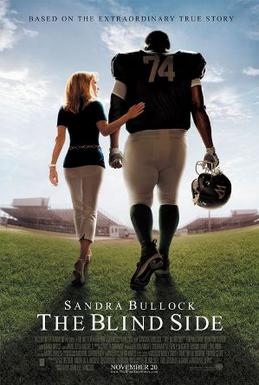
Hollywood portrayals of African American athletes are accurate with the personalities and the settings but fail to recognize that the majority of African American athletes do not have a "Cinderella" story.  For example, comparing the Hollywood movie "The Blind Side" to the documentary titled "Hoop Dreams".  The Blind Side much like other sports movies with African American athletes begins with a disadvantaged beginning and an eventual and glorious success.  I myself love these kinds of movies but documentaries such as "Hoop Dreams" portray the actual truth.  Most African American athletes don't make it past the high school and college level.  (Prof. Withycombe, ETHN 3104, Lecture)


I do believe that sport damages Black Americans and preserves the myth of race.  The stereotypes that are generated through sports entices Black Americans to define themselves through only their abilities in athletics.  Value is placed higher on being an athlete rather than becoming a doctor or a mathematician.  "Race is used to justify social inequalities as natural" (Prof. Withycombe, ETHN 3104, Ethnicity PPT).  Sports in African American culture currently plays a role in hindering a non racial point of view.

References:

http://upload.wikimedia.org/wikipedia/en/6/60/Blind_side_poster.jpg (Image)

Professor Jenny Withycombe Lectures and Power Point Presentations.

Tuesday, March 11, 2014

"Gender in Sports Commercials"

For this week's blog I chose to examine a "Just Do It" commercial by Nike.

http://www.youtube.com/watch?v=aPkyPdubqDs

The commercial portrayed typical gender stereotypes by showing females doing sports such as Tennis and Running while the males were shown doing sports such as Boxing, Soccer, and Basketball.  The athletes involved in the commercials were adhering to dominant gender roles and identities.  This may be due to the fact that the "sports world" is created to be what Coakley defines as...

"1.  Male dominated so that the characteristics of men are used as standards for judging qualifications.

 2. Male identified so that the orientations and actions of men are used as standards for defining what is right and normal

 3.  Male centered so that men and men's lives are the expected focus of attention in sport programs, stories, legends, and media coverage." (Coakley, 249-250)"

I found it interesting that the message at the end of the commercial was that the pinnacle of basketball skill was a "dunk contest" (Skill stereotype).

The consequences that these commercials create is an effect on all of the young children.  The young people learn from media what it means to be a "successful" athlete.  The young people are subliminally taught to enforce gender roles and identities through these advertisements.  Once the commercials stop enforcing gendered identities than it will be easier to eliminate the problem of gender bias in sports.


Friday, February 21, 2014

Interrogating inequalities in Sports Media: Examining gender/race representation in Sports Illustrated

For this week's blog I chose to closely analyze the covers of Sports Illustrated magazine.  I examined all of the SI covers from the year 2013.

How many of the SI covers of 2013 featured women?

The answer was a bit shocking knowing that both male and females participate in vast quantities of sports.  Out of the 102 Sports Illustrated covers only 3 were female that's an estimate of 2 percent! Two of the SI covers featured model Kate Upton.  She appeared on the SI swimsuit edition with nothing but a fur coat on.  The other cover was with two Atlanta Braves baseball team members holding her on their shoulders.  The Braves players and Kate all share the last name Upton.  The last female on the SI cover was a Boston policewoman.  The officer was featured along with two Boston policemen and Boston Red Sox star David Ortiz.

From the findings it is clear that gender inequality exists in sports media.  No woman who is currently a professional/college/highschool athlete appeared on the covers of SI in 2013.  Even when there was a woman on the cover it had to be accompanied by more men (aside from the swimsuit issue).  The consequences for having this inequality in sports media correlates to the inequality of gender in actual sport.  Popular magazines such as Sports Illustrated play an immense role in the general societies perception of sport.  SI holds the power of being able to play a role in socially constructing how we view gender in sport.

References:
http://sportsillustrated.cnn.com/magazine/photos/1305/si-covers-2013/16/

Sunday, February 16, 2014

Reflecting on the Shame of College Sports: Should NCAA Div 1 Basketball and Football players get paid?

Should NCAA Division 1 Basketball and Football players get paid?

The answer to this question is controversial and there are plausible arguments for both paid and not paid. 

For paid: 

College athletics brings in millions and millions of dollars.  Penn-State athletics is a perfect example bringing in $73 million dollars while only spending $19.5 million which equals a $53.5 million dollar profit.  The players only get "paid" their education which barely hits six figures.  College students are often compared to slaves and sweat shop workers.  Just like any ideal working situation the belief is that you should get paid for what you earn.  

For not paid:

The argument for college athletes not being paid also holds merit.  Suppose we pay the college athletes right? The athletes would soon become just like the pro sports and be playing for the money not the game.  A certain integrity is held with college sports.  These players are playing for their survival every time they step out on the field/court.  If they perform well then the chances of them getting drafted in to the pros increases.  If given money at the college level it is quite possible that some players might make their money and ditch the glory and the pride of winning in college sports.  Athletes are already more privileged over other students and with this amount of money the problem would increase.

So how do we solve this debate?

In my opinion, the colleges are not the bad guys in fact they are the ones who have been coerced in to the master plan of corporations.  It can be argued that the colleges don't have to make these million dollar deals but I believe the intentions of bettering institutions can be good.  The problem lies within the corporations that run the show.  A solution could be created by congress by passing laws that would prevent this substantial amount of commercialization.  The president of the NCAA Myles Brand even admitted that "In a number of our major institutions with large athletic departments, expectations have become unsustainable" (Coakley, 515).  Make education the equal or higher value over how much money could be made as a college athlete and the problem becomes solved.

References:

NYT Sport Economy, https://learn.colorado.edu/d2l/le/content/59211/viewContent/1457475/View

Coakley, Jay J,
 Sports in Society: Issues and Controversies, ninth edition, 2007

The Shame of College Sports,  http://www.theatlantic.com/magazine/archive/2011/10/the-shame-of-college-sports/308643/

Friday, February 14, 2014

High School Sport

Social conditions in high school play an immense role in developing the attitudes and beliefs of the upcoming generation.  Whether it be showing masculinity, popularity, and dominance it can have a harsh consequence in the makings of men and women across the country.  These social conditions in high school have emerged due to the seeds that have been planted by coaches, parents, and athletic companies in kids at the middle school age.

The objective of high school sports on the surface is to "keep kids off the streets" or to "teach values".  In reality it is much more than a simple pass time.  High school sports has become the platform for young athletes to display athletic superiority.  Depending on how well you do determines if you can get in to a popular college in the spotlight to do the exact same thing in hopes of making it to the pros. The real objective of high school sport is being undermined by the fame and the glory of becoming the best.

Interscholastic sport starts in middle school and carries on through high school and eventually college becomes the highest level and last stop.  The main issue in my opinion is that sports gives a pass to those who are good.  It gives a pass to academic standard and the humbling reminder about the values that sport teaches.  The problem doesn't apply to everyone but it applies to a good majority of athletes.  The issue can be resolved through the adults, coaches, and teachers.  They can teach children at a young age that sports are important but at the same time will most likely be only a portion of their life.  How will you make a positive impact on society once your career is done?  If you love sports find a way to help the world through it.  Change the focus of your legacy to be around both what you've done in sport and what you've done for the world.

References:

Dohrmann
 https://learn.colorado.edu/d2l/le/content/59211/viewContent/1378066/View